Sweatpants Are Lying to You: How Your WFH Wardrobe Is Quietly Killing Your Confidence
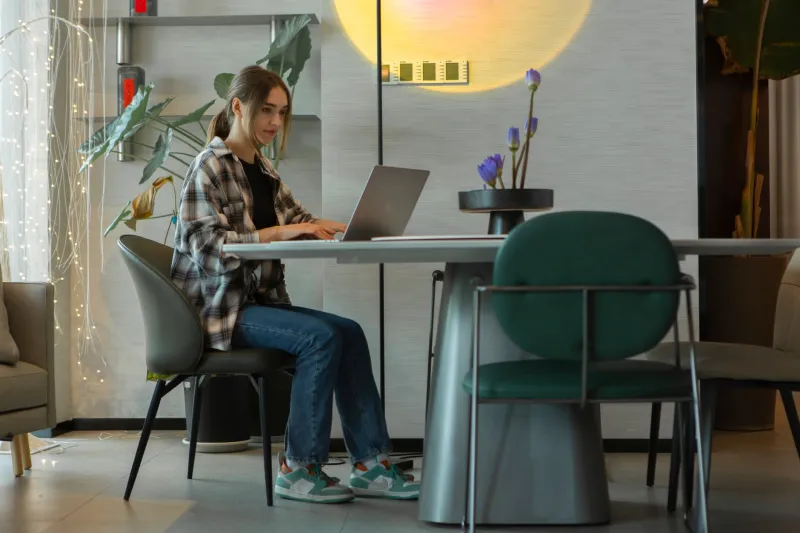
Let's be honest for a second. When remote work first became the norm, a lot of us quietly celebrated. No more rushing to iron a blouse at 7 a.m. No more pinching shoes on a Tuesday. Just you, your laptop, and the soft, forgiving embrace of your favorite loungewear.
Fast forward a couple of years, and that celebratory comfort has turned into something a little harder to shake — a creeping sense that you're somehow less sharp, less motivated, and less you than you used to be. Sound familiar? You're not imagining it.
The way we dress doesn't just signal something to the outside world. It signals something to ourselves. And when we spend eight hours a day in clothes we'd wear to a lazy Sunday brunch, our brains eventually get the memo: this is not a performance day.
The Psychology Behind Getting Dressed (Yes, Really)
Researchers have actually studied this phenomenon — it's sometimes called "enclothed cognition," the idea that the clothes we wear influence our psychological state and cognitive performance. In plain terms: dressing the part can help you act the part.
This doesn't mean you need to squeeze back into a blazer and heels to answer emails. But it does mean that the total abandonment of intentional dressing — the full slide into all-day pajamas and oversized hoodies — has real consequences for how you feel, how you show up on video calls, and how seriously you take your own work.
There's also a subtler issue at play. When your work clothes and your sleep clothes are the same clothes, the psychological boundary between "work mode" and "off mode" starts to blur. That boundary matters more than we give it credit for.
Where the Comfort Trap Starts
The comfort trap doesn't happen overnight. It's gradual. It starts with one day of leggings because your back hurts. Then it's a week of hoodies because it's cold. Then you realize you haven't worn actual pants with a waistband in three months, and somehow that feels completely fine.
The problem isn't comfort itself — comfort is genuinely important, especially when you're sitting at a desk for hours. The problem is the default. When comfort becomes the only criterion for getting dressed, everything else — how you feel, how you present yourself, how you transition into a productive headspace — gets quietly sacrificed.
Many remote professionals describe a slow erosion of confidence that they can't quite pinpoint. They feel less decisive in meetings, less authoritative on calls, less willing to turn their camera on. The wardrobe connection isn't always obvious, but it's often there.
Building Your Professional Comfort Zone
The good news? You don't have to choose between feeling good physically and feeling good mentally. The goal is a middle ground — what we like to call your professional comfort zone — and it's more achievable than you might think.
Start With a "Dressed but Not Dressed Up" Baseline
Think of this as your WFH uniform, but make it intentional. A pair of well-fitted ponte pants or pull-on trousers. A soft crewneck sweater that doesn't look like it came from a gym bag. Clean, simple, and put-together — without being stiff or formal.
The key word here is fitted. Clothes don't need to be tight, but they should have some shape. Shapeless oversized pieces read as casual to your brain in a way that a relaxed-but-tailored silhouette simply doesn't.
Keep a "Camera-Ready" Layer Handy
One of the most practical WFH styling tricks is keeping a single elevated layer — a structured cardigan, a light blazer, a neat button-down — draped over your chair or hanging nearby. You don't have to wear it all day. But having it there means you can throw it on in thirty seconds for a video call and instantly look like you've got it together.
This also removes the anxiety of being caught off-guard. That low-grade stress of oh no, I have a Zoom in five minutes and I look like this is surprisingly draining over time.
Invest in Elevated Basics That Pull Double Duty
This is where a thoughtful capsule wardrobe approach really pays off for remote workers. Look for pieces that feel like loungewear but look like real clothes. Brands across every price point now offer stretch-waist trousers, soft-knit tops with clean lines, and comfortable dresses that don't read as casual.
A few solid investments here go a long way. You're not building a full corporate wardrobe — you're just making sure that when you get dressed in the morning, you have options that make you feel like a person who has places to be and things to accomplish.
Create a Getting-Dressed Ritual
This sounds small, but it matters: actually get dressed in the morning, even if you're not going anywhere. Change out of what you slept in. Wash your face. Put on clothes that you chose, not clothes that were just the first thing within reach.
This ritual serves as a mental transition — a signal to your brain that the workday is beginning. It doesn't need to take more than ten minutes. But that ten minutes can meaningfully shift your energy and focus in a way that rolling straight from bed to desk simply doesn't.
The Bigger Picture
Dressing with intention while working from home isn't about performing professionalism for anyone else's benefit. It's about showing up for yourself. It's about respecting your own time, your own work, and your own sense of identity as someone who takes what they do seriously.
Comfort and confidence are not opposites. With the right pieces and a little bit of intentionality, you can absolutely have both. The sweatpants will still be there on weekends — and honestly, they'll feel even better when they're a reward instead of a default.
Your wardrobe is working on you whether you realize it or not. It might as well be working for you.