Why 30 Pieces Will Never Be Enough: A Realistic Take on Work Wardrobes
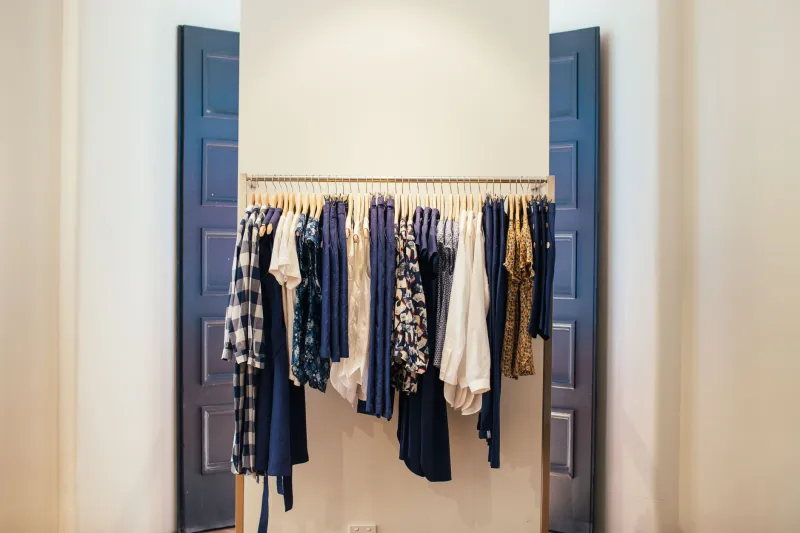
Every few months, a new wave of capsule wardrobe content floods the internet. Flat lays of perfectly pressed neutrals. Neatly numbered lists. The promise that thirty — or sometimes a daring ten — pieces are all you'll ever need to look polished, intentional, and effortlessly put-together. It's a beautiful idea. And for a very specific type of person living a very specific kind of life, it might even work.
But for most American professionals? It's a fantasy that quietly sets us up to feel like we're doing fashion wrong.
Let's talk about why the capsule wardrobe myth deserves a little pushback — and what a more realistic, still-organized approach to your work wardrobe actually looks like.
The Capsule Ideal Was Built for a Narrow Life
The modern capsule wardrobe concept, popularized in its current form by minimalist bloggers and slow fashion advocates, tends to imagine a pretty narrow professional existence. You work in a sleek open-plan office. Your climate is mild. You're a sample size. You have one consistent dress code.
Sound like you? Maybe. But most working women in the US are navigating a much messier reality. A healthcare worker in Minneapolis needs scrubs and a professional wardrobe for administrative days and something warm enough for a January parking lot walk. A sales rep in Houston is dressing for 95-degree outdoor client visits in the morning and aggressively air-conditioned conference rooms in the afternoon. A teacher in New York City needs outfits that can survive a full day on their feet, a parent meeting after school, and maybe a quick dinner out.
Thirty pieces, no matter how carefully chosen, aren't going to cover that range without leaving some real gaps.
Climate Zones Don't Cooperate with Minimalism
Here's something capsule wardrobe guides almost never account for: the United States spans an enormous range of climates, and most of us dress for all of them at some point — even if we never leave our home state.
If you live in Chicago, you're not building one wardrobe. You're building at least three seasonal ones that need to coexist in your closet for weeks at a time during transitional months. If you travel for work, you might be packing for Miami and Seattle in the same month. A capsule built around year-round basics in muted tones doesn't help you when you need a lightweight blazer that won't make you sweat through a presentation in Phoenix.
Seasonal layering alone — the cardigans, the transitional jackets, the boots versus sandals versus block-heel pumps equation — can easily push a practical professional wardrobe past the thirty-piece ceiling before you've even gotten to actual variety.
Industry Dress Codes Are More Complicated Than They Look
Another piece the capsule conversation tends to gloss over: dress codes vary wildly by industry, and many of us work in fields where they shift within a single week.
A marketing manager at a mid-size company might need business casual for internal meetings on Monday, something more polished for a client presentation on Wednesday, and a smart-casual look for a team happy hour on Friday. That's three distinct registers in five days. A real estate agent needs to look approachable and trustworthy at an open house, professional at a closing, and camera-ready for listing photos — sometimes all in the same week.
The idea that a handful of versatile pieces can cover all of those situations without the outfit feeling strained or repetitive is optimistic at best. At worst, it leads to that specific anxiety of standing in front of your closet thinking, I've worn this blazer to the last three client meetings and everyone has definitely noticed.
Body Diversity Makes "Universal" Basics a Myth
Let's also be honest about something the capsule aesthetic rarely addresses head-on: fit is deeply personal, and finding pieces that actually work for your body takes more tries than a curated list suggests.
For plus-size professionals, petite women, tall women, and anyone whose proportions don't match the straight-size model the fashion industry still largely designs for, building a wardrobe is often about finding what actually fits rather than chasing an idealized list. That process almost always results in owning more pieces — because you've had to search harder, buy multiples of things that work, and replace items that photograph well but don't actually function on your body.
A sensible wardrobe isn't about hitting a magic number. It's about having enough of the right things that getting dressed doesn't feel like a problem to solve every morning.
So What Does a Realistic Professional Wardrobe Actually Look Like?
None of this is an argument for hoarding or mindless shopping. The core instinct behind the capsule wardrobe — buy less, choose well, reduce decision fatigue — is genuinely good advice. The problem is when the method becomes more important than the outcome.
Here's a more practical framework:
Anchor around categories, not counts. Instead of aiming for a specific number of pieces, think about whether you have enough in each category for your actual life. Do you have enough bottoms to rotate through a full work week without repeating? Enough layering options for your climate? Enough shoes for your different dress code needs? Fill the gaps that genuinely exist, and don't worry about the total.
Let your industry set the floor. If your job requires a certain level of formality, that's non-negotiable. Build from there rather than trying to retrofit a minimalist wardrobe onto professional requirements that don't flex.
Invest in quality where you wear it most. The capsule philosophy gets this right: a well-made blazer or a pair of trousers that actually fits is worth more than five cheap versions. Just don't let "invest in fewer pieces" become an excuse to own things that don't fully meet your needs.
Organize ruthlessly, even if you own more. The real goal of a capsule wardrobe is to make getting dressed easier. You can achieve that with fifty pieces if they're organized well, fit properly, and you actually reach for all of them. A cluttered closet full of things you love is still a cluttered closet — so edit often, just don't edit down to an arbitrary number.
The Most Stylish Thing You Can Do
At Sensible Stylista, we're big believers in practicality as a form of elegance. And the most practical thing you can do for your work wardrobe is build it around your actual life — not someone else's aesthetic, not a trending number, and definitely not a one-size-fits-all formula.
Owning the right amount of clothes for you — your climate, your industry, your body, your schedule — is more sensible than owning the minimum amount of clothes for an imaginary professional who lives somewhere simpler. Give yourself permission to have what you actually need. That's not excess. That's just good dressing.