Ditch the 40-Piece Rule: How to Build a Wardrobe That Actually Fits Your Real Life

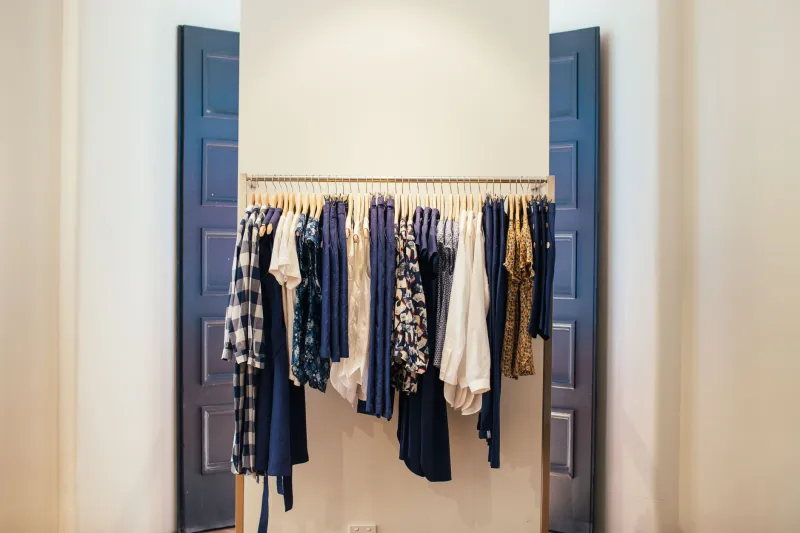
Every few months, a new capsule wardrobe guide makes the rounds online. It promises freedom from decision fatigue, a clutter-free closet, and effortless style — all neatly packaged into 33, 37, or 40 carefully curated pieces. The aesthetic is always the same: a sun-drenched loft, a wooden hanger, a neutral-toned trench coat draped just so.
It's aspirational. It's also, for a huge chunk of working Americans, completely disconnected from reality.
That's not a knock on minimalism as a concept. Intentional dressing is genuinely useful. The problem is that the capsule wardrobe formula has become weirdly prescriptive — a one-size-fits-all solution handed down to people with wildly different bodies, budgets, jobs, and zip codes. And when it doesn't work for you, the implication is somehow that you failed the wardrobe, not the other way around.
Let's set the record straight.
The Myth of the Universal Wardrobe
The classic capsule wardrobe was originally conceived in the 1970s by London boutique owner Susie Faux as a small collection of timeless, high-quality essentials. It was a solid idea — buy less, choose well, make it last. The issue is that decades of lifestyle blogging have turned a flexible philosophy into a rigid checklist.
That checklist typically assumes you live somewhere with four mild seasons, work in a business-casual office, wear a straight or slim silhouette, and have a few hundred dollars to drop on a cashmere crewneck without blinking. It assumes your weekends look like a Madewell catalog and your commute doesn't involve a construction site, a hospital floor, or a school cafeteria.
For a nurse in Phoenix who needs scrubs five days a week and deals with 110-degree summers? The formula breaks. For a teacher in Minneapolis who layers aggressively from October through April and still needs to look professional? It breaks again. For a plus-size woman who already knows that "just grab a white button-down" is never as simple as it sounds? It was never built for her in the first place.
What Rigid Minimalism Gets Wrong
Here's the core issue: a number is not a strategy.
Saying your wardrobe should contain exactly 40 pieces ignores the fact that clothing needs vary enormously based on lifestyle complexity. Someone who works from home, hits the gym, and has an active social life might genuinely need more category diversity than someone with a single dress code and a quiet routine. A person who fluctuates in size throughout the year due to health, pregnancy, or natural body changes can't treat their closet like a sealed archive.
Budget is another piece the capsule narrative consistently glosses over. The "buy quality, not quantity" advice is sound in principle, but it assumes you can afford to spend $180 on a single pair of trousers. Many people are building their wardrobes incrementally, mixing Target finds with thrifted pieces and the occasional splurge. That's not a failure of discipline — that's just how most Americans actually shop.
There's also a psychological toll to consider. When you've been told your wardrobe should look a certain way and yours doesn't, it's easy to feel perpetually behind. You cycle through purges and restocks, chasing an ideal that was never calibrated to your actual life.
A Better Framework: The Flexible Foundation
Instead of counting pieces, try thinking in terms of what your wardrobe actually needs to do.
Start by mapping out your real weekly life — not your aspirational one. How many days do you work, and what does that environment actually require? Do you have regular social commitments, workouts, or events that demand a different kind of dressing? Are there seasonal extremes you genuinely have to dress for?
From there, build what you might call a flexible foundation: a core of versatile, mix-and-match pieces that cover your most frequent scenarios, surrounded by a smaller set of category-specific items for the contexts that don't overlap.
For a lot of professionals, that flexible foundation might look something like this:
- Bottoms that work across contexts — two or three pairs of well-fitting pants or skirts that can read as work-appropriate or casual depending on what's paired with them
- Layering pieces with range — a blazer, a cardigan, or a structured jacket that elevates a casual top or softens a formal one
- Tops in a cohesive color story — not necessarily neutrals only, but colors that play nicely together so you're not locked into specific combinations
- One or two dresses or jumpsuits — single-piece options that require zero coordination effort on low-energy mornings
- Shoes that don't fight your life — comfortable options that still look polished, because no outfit survives uncomfortable footwear
Notice there's no number attached to any of that. The point isn't to hit a target — it's to make sure every zone of your life is covered without redundancy.
Intentional, Not Minimal
The goal was never really to own fewer things. The goal was to stop feeling overwhelmed and underloved by your closet. Those are different problems with different solutions.
Intentional dressing means knowing why something is in your wardrobe and being honest when it isn't earning its space. It means resisting the impulse buy that doesn't connect to anything you already own. It means choosing pieces that fit your body now, not a future version of yourself.
It does not mean owning a specific number of items, following someone else's color palette, or pretending that your job as a middle school art teacher has the same wardrobe demands as a tech startup founder who works from coffee shops.
Your wardrobe should be a tool — a practical, comfortable, confidence-boosting one. And like any good tool, it should be sized and shaped for the person actually using it.
Give Yourself Permission to Be Specific
The most useful thing you can do for your style right now is stop trying to make your life fit the framework and start building a framework that fits your life.
That might mean owning 28 pieces. It might mean owning 65. It might mean maintaining two mini wardrobes — one for work, one for everything else — because your professional context is just that different from your personal one. All of that is valid.
The capsule wardrobe concept gave us something genuinely valuable: permission to be more thoughtful about what we bring into our closets. But somewhere along the way, the lesson got buried under a pile of rules that never accounted for the full, complicated, beautifully non-photogenic reality of most people's lives.
You don't need a perfect wardrobe. You need one that works — for your budget, your body, your climate, and the actual Tuesday you're going to wake up to next week. Start there, and you're already ahead of the formula.